Recovery works best on therapies with real clinical support behind them. At Carrara, every therapy is chosen for its evidence base and matched to your history, then delivered in a private Malibu house by clinicians trained in it.
The spine of treatment is individual, evidence-based psychotherapy, delivered often, with group, family and body-based work around it. Different people respond to different approaches, so the clinical team combines these based on what each person actually needs.
CBT, the workhorse: the thought patterns that drive use, made visible and then changeable. The techniques, explained.
DBT: skills in distress tolerance, emotion regulation and dealing with people, for the moments that used to end in using.
Eye movement desensitization and reprocessing, for trauma that talk alone doesn’t reach, without reliving it in detail session after session.
The trauma-focused pair, for when the substance was the symptom and the injury underneath needs its own treatment.
For ambivalence, which isn’t a character flaw but the honest starting state of most recoveries.
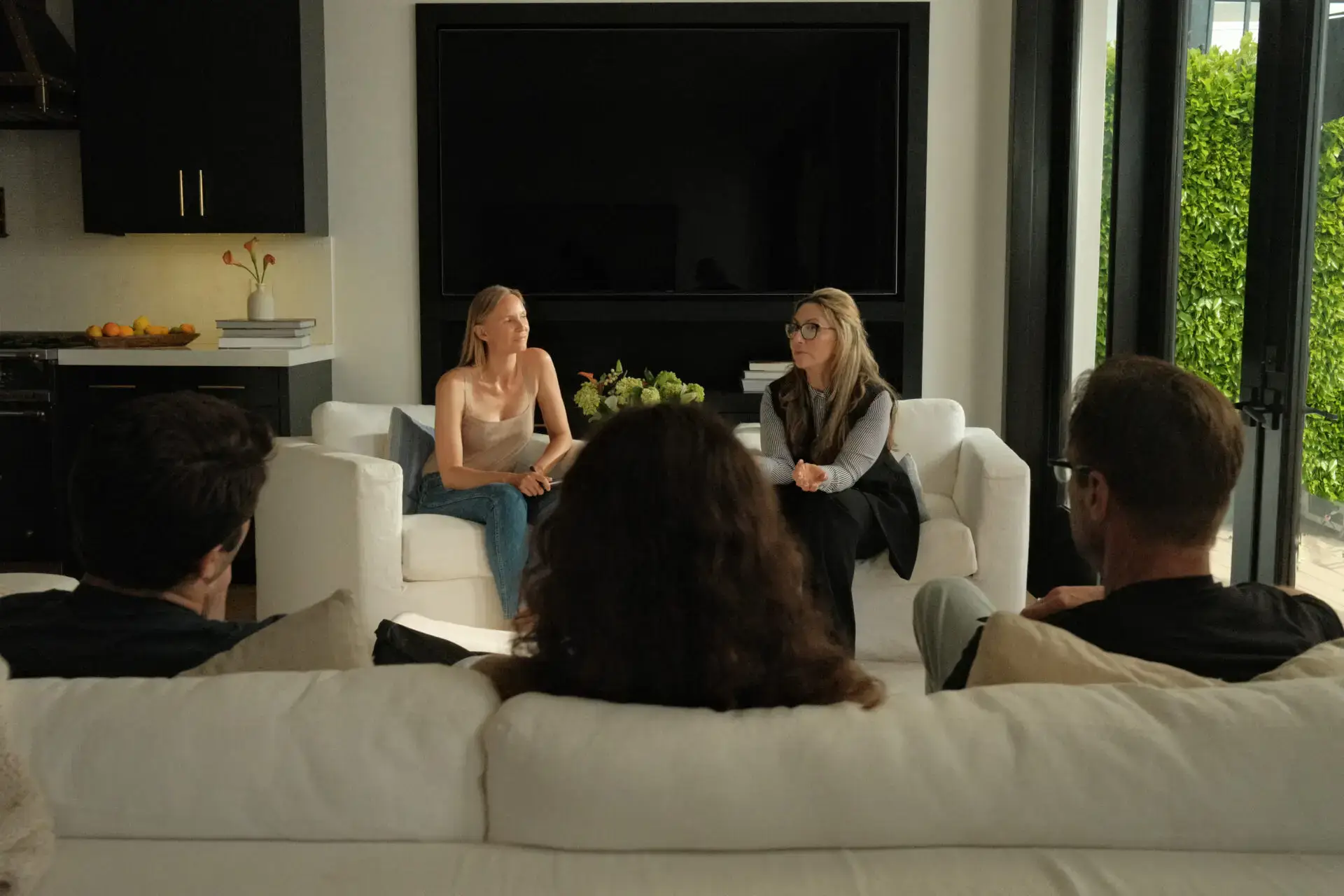
Six clients is the whole house, so it is also the ceiling on every group, led by clinicians including Dr. Blair Steel, a licensed psychologist, and Kathryn Diaz, Primary Therapist. Most of what goes wrong in group therapy is a function of size.
The household learned the addiction too. Family sessions are scheduled where the plan supports them, and for partners in treatment together, behavioral couples therapy is layered onto two individual plans in the couples program.
Somatic experiencing works through the nervous system rather than around it, and grounding techniques make the other therapies usable on a bad day.
Structured stress management for one of the most common relapse triggers, and art and music therapy as real sessions: nonverbal routes into material conversation circles for weeks.
No single therapy works for everyone, and nobody is handed a fixed program on day one.
Before therapy begins, clinicians look at your history, trauma background, co-occurring conditions and goals to choose the right combination.
Each therapist is trained in the specific therapies they practice, not a generalist applying one method to everyone.
One-to-one sessions carry the treatment; groups of six at most support it, each with a different job.
The mix of therapies changes as you do, matched to what is working and what still needs attention.
Therapy asks you to be vulnerable, and a house with six clients removes the pressure of being seen.
You leave with a continuing care plan built around the therapies that served you best.
Most treatment sites describe a wellness program in the passive voice. Ours has names, because the people are real and the schedule is theirs.
Trauma-informed yoga, sound therapy, stretch therapy and meditation.
Breathwork, Reiki, meditation, soundbath and craniosacral sessions across the week.
Acupuncture, scheduled where the clinical plan wants it.
Chiropractic care, for the bodies that arrive carrying more than stress.
Personal training, built back up at the pace the medical team sets.
Bodywork and spa care scheduled around the clinical plan rather than instead of it.
The clinical program is directed by Patricia Freebery, Executive Clinical Director, a Licensed Marriage and Family Therapist more than twenty years into Los Angeles private practice, and her team averages 20,000 hours of clinical experience per clinician. Care is a sequence of decisions, each informed by how you are actually responding.
A clinician evaluates substance use history, mental health, trauma background and personal circumstances to shape a first approach.
The team selects a first combination, CBT, EMDR, group work or something else, and you’re consulted rather than conscripted.
Individual and group sessions, up to 80 hours of individual 1-on-1 points of client contact per month, with the plan adjusted as new needs surface.
Before discharge, you and your clinicians decide which therapies continue, and where.
A page listing therapies at a luxury addiction treatment center is incomplete without these. One is a treatment in its own right; the other decides whether any of the rest holds.
Depression, anxiety, trauma and bipolar disorder are treated alongside the substance use rather than after it, by psychiatrists on staff. Dr. Dana Harris is board certified in adult psychiatry and addiction medicine and is President of the California Society of Addiction Medicine. Treating one and deferring the other is the most common reason a first attempt does not hold.
Medication-assisted treatment is a clinical decision made at evaluation, not a philosophy the house holds. What MAT actually does.
The discharge plan is drafted while the therapy is still running, not on the last morning: continuing therapy, the supports that already exist, and the structure that has to be in place before anybody needs it. What the year after looks like.
Because a beautiful setting can support recovery but can’t replace it; the therapy has to do the work. Evidence-based means studied and tested rather than chosen for comfort or tradition, and none of these therapies is a cure. The work is matching the right tools to one person’s history, then doing the unglamorous weekly labor of using them.
One line in the same spirit: training in psychedelic-assisted psychotherapy exists on this team, through MAPS and CIIS, and psychedelic therapy is not a service offered at Carrara. If that ever changes, this page will say so.
The schedule answers that: up to 80 hours of individual 1-on-1 points of client contact per month, before any spa booking. Amenities exist here because comfort keeps people in treatment, not instead of it.
The work the body does that words catch up to later: somatic experiencing, art and music therapy, trauma-informed movement. It supplements talk therapy where talk alone stalls.
You’re consulted and never conscripted, but the plan is clinical: therapies are matched to your history at evaluation and revised as the work moves.
One confidential call with Carrara’s own admissions team, and an honest answer about whether this program fits, including which therapies your plan would likely draw on. You can reach the team on (888) 383-5207.
A list of therapies is a menu; a treatment plan is a fit. Call and describe what has and hasn’t worked before, and Carrara’s own admissions team will tell you plainly what a plan here would draw on, and whether this is the right place at all.
If this is an emergency, call 911. For free confidential support 24 hours a day, call or text 988.
This page is general information, not medical advice.